
Choosing the Best Imposter Game Besides Among Us
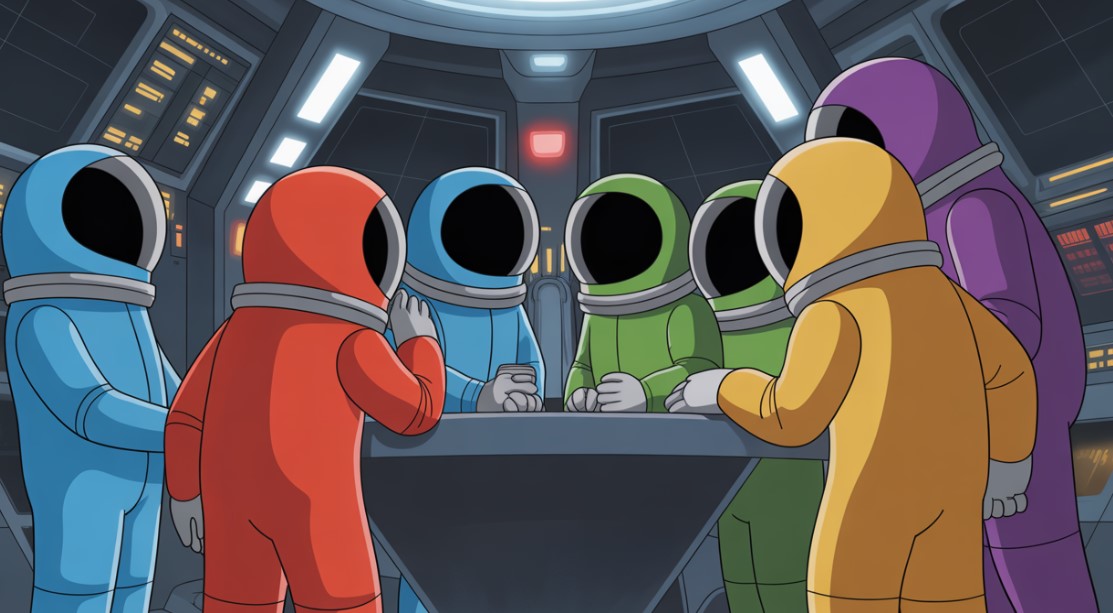
You know, it’s funny how a simple little game about spacemen doing tasks-and, okay, murder-took over the world. Among Us seriously revitalized the whole imposter game genre, bringing that classic social deduction party vibe (think Mafia or Werewolf) to a massive online audience. It made the term “imposter game” a household name overnight.
But honestly, if you’re like us at Mensy.Studio, you’re looking past the obvious hit. If you’re a developer or an artist dreaming up your own social deduction project, you can’t just copy the formula. You need to see how other games tackle deception, tension, and that sweet, sweet moment of accusation. The market’s actually full of fantastic titles, each with its own unique mechanical twist. Let’s look at what’s out there and what makes them tick, shall we?
The Core of Imposter Game Titles: What Makes a Liar’s Game Work?
At its heart, a great imposter game is a crucible for human psychology. It’s not about graphics or perfectly balanced weapons; it’s about trust. It forces people to communicate-or, more importantly, miscommunicate.
You’re basically making a lie-detector test, but the lie-detector is just other players’ gut feelings, which is a wild ride, right?
The key design tension always boils down to a few things:
- Information Asymmetry: The “good guys” have some information, but the imposters (or traitors, or werewolves, whatever you wanna call ’em) have different, often secret, information.
- Proof vs. Persuasion: The innocents need hard proof, while the villains only need enough plausible deniability to confuse the conversation and shift the blame. It’s a lawyer simulator, but with more shouting.
- The Stakes: What do you lose if you get it wrong? A few minutes of your time? Or, like in some survival games, maybe your whole team dies in the snow?
This balance is tricky. Too much information for the innocent team, and the game becomes trivial. Too much power for the traitors, and it stops being fun-it just feels random and unfair. Honesty, we’ve spent countless hours on our own projects just tweaking the speed of sabotage versus the speed of task completion. It’s a delicate dance!
Thinking Beyond the Spaceship: Genre-Bending Deception
The genre is a lot wider than you might think. We need to consider how other games have stretched the concept.
Project Winter: The Cold Reality of Betrayal
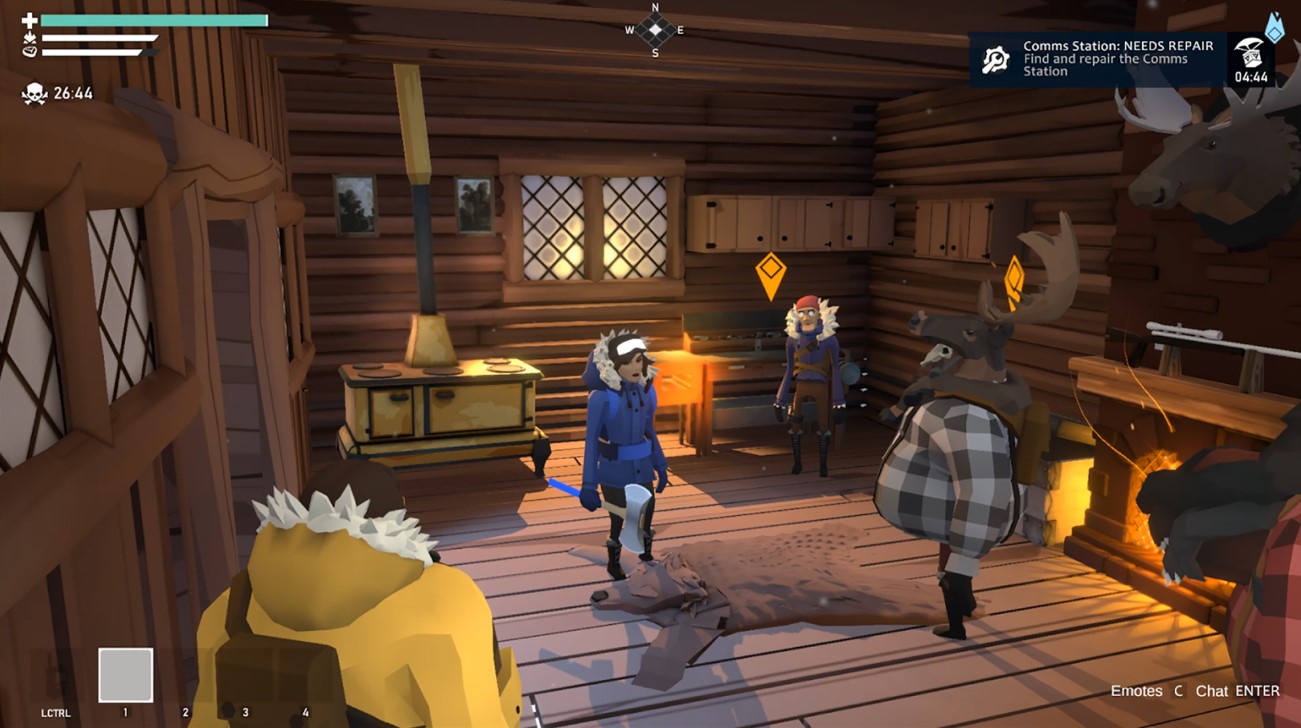
Look at Project Winter. Now, this is a masterclass in raising the stakes. It blends the social deduction element with harsh survival mechanics. You’re out in the freezing wilderness. You’re trying to gather resources, fix a radio, and escape. That’s your “tasks” side.
But there’s a catch: a few of you are traitors who are secretly setting traps and trying to starve the group. You know what’s brilliant about it? The betrayal isn’t just a simple kill; it’s an insidious slow burn. Did that guy forget to bring back wood, or is he deliberately draining the fire’s resources to kill us slowly? The stakes feel real because the environment itself is trying to kill you, which makes the human threat so much more chilling. This is a great model if you’re thinking about a horror or survival twist on the genre.
Town of Salem: More Roles, More Chaos
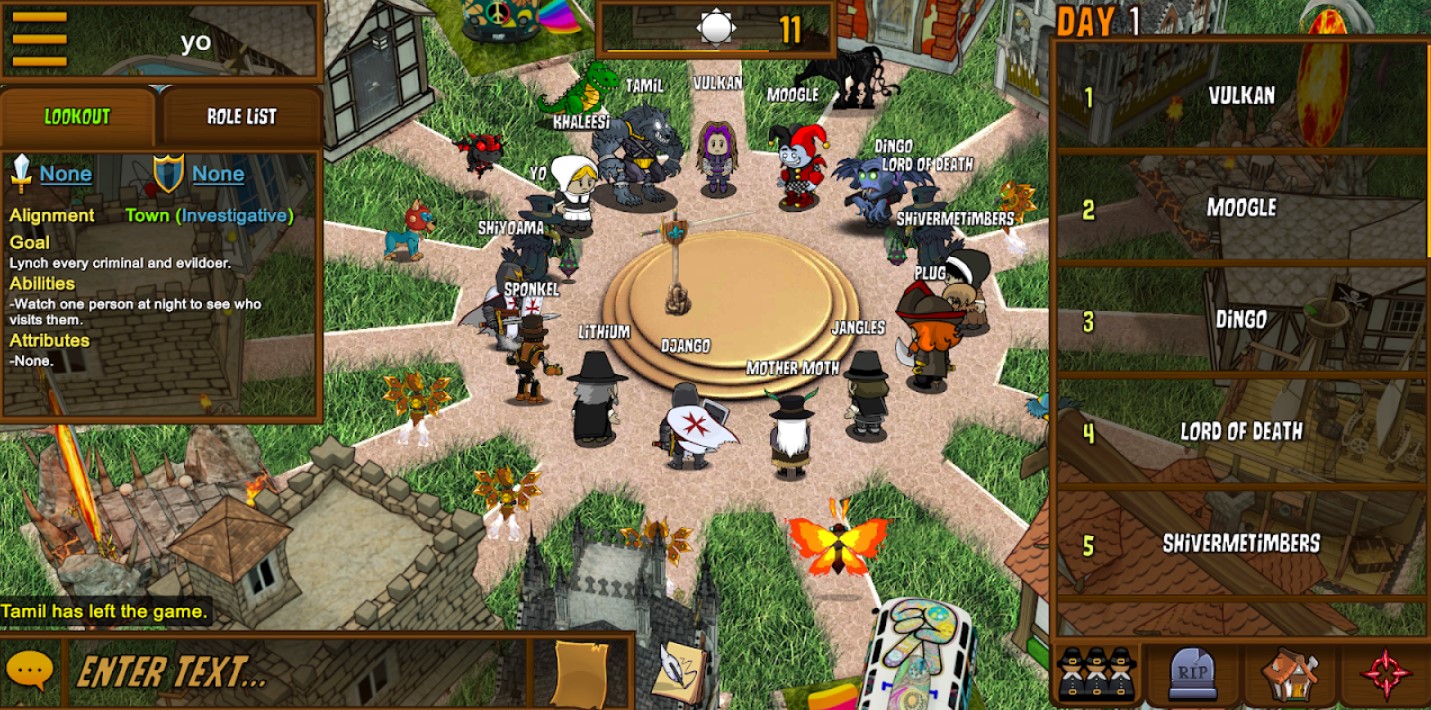
Then you’ve got the games that just crank the “role complexity” dial up to eleven. Town of Salem-and its spiritual predecessor, the tabletop game Mafia-gives players a sprawling list of roles: Sheriffs, Doctors, Jesters, Witches, Godfathers.
The fun and the design challenge come from how all these roles interact and create what we call a “messy middle ground.” No one knows who anyone is, and the imposters (the “Mafia” and “Neutral Evil” roles) have to navigate a minefield of unpredictable abilities. A Doctor might save a target; a Jester might want to be executed to win. If you’re designing a game for a big group that loves deep, winding strategy and chat-based manipulation, this kind of system is your gold standard.
| Game Title | Primary Deception Mechanic | Key Non-Imposter Goal | Unique Selling Point (USP) for Devs |
| Project Winter | Resource sabotage & isolation | Escape the harsh wilderness | Blending survival/resource management with social deduction. |
| Town of Salem | Coordinated night-time kills/sabotage | Find the guilty using role abilities | High role count creates deep, asymmetrical, and unpredictable outcomes. |
| Gnosia | Conversation-based deduction/elimination | Survive the loop/repair the ship | Single-player deduction with time-loop (roguelike) structure. |
| First Class Trouble | Team-based sabotage & environmental kills | Activate the escape module | Focus on environmental hazards and proximity chat for organic moments. |
How to Make Your Own Imposter Game Feel Fresh?
So, you’re sitting there, maybe sketching out some character designs or coding your first movement prototype. How do you make your imposter game stand out from the crowd?
The “Gnosia” Method: Going Solo
Honestly, what if you took the social deduction thing and made it single-player? Crazy, right? But check this out: Gnosia does exactly that. It’s a visual novel/roguelike hybrid where you have to figure out who the Gnosia (the imposters) are in a time loop. Every loop is a new setup. It works because it forces you, the player, to pay attention to subtle dialogue cues and statistical probabilities, replacing the real-time social chaos with deep, calculated deduction. That’s a powerful idea for any developer who loves narrative or wants to prove that great social mechanics don’t always need human opponents.
Proximity and Environmental Lies
Another thing we love to study is how games use the environment itself to enable deception. In First Class Trouble, for example, you’re running around a luxury space cruise ship. The imposters, the “Personoids,” can close airlocks on people, push them into fire, or flood a room.
The key isn’t just the kill; it’s the real-time risk. Suddenly, you’re not just accusing someone in a text chat; you’re standing next to a switch, and you have to decide if the person beside you is about to throw you into a laser grid. Proximity voice chat in these games? Game changer. Hearing someone shout, “No, wait, don’t leave me here!” right before a door slams shut is just… chef’s kiss. It adds a physical, immediate panic that pure text communication can’t match.
The Developer’s Toolkit: Key Mechanics to Steal (I Mean, Study)
When we’re brainstorming, we look for mechanics we can repurpose. Here are a few that really matter in the genre:
- Limited Communication: Restricting chat to certain zones (like First Class Trouble‘s proximity chat) or only during specific “meeting” phases (the Among Us standard). You limit information, which breeds suspicion.
- The Sabotage System: Imposters need a fun, meaningful way to disrupt the flow. A good sabotage isn’t just a nuisance; it forces the innocents to split up, creating opportunities for the traitors. In Deceit, turning off the lights makes the “infected” monstrous and powerful, drastically changing the gameplay loop.
- Unique Role Conditions: The Jester in Town of Salem wins if they’re executed. The “Infected” in Deceit can only truly murder when the lights are out. These weird, asymmetrical win conditions throw curveballs into every voting phase. It makes the players think, “Wait, is this person acting stupid because they want us to vote them out?”
| Game | Deception Focus | Crew/Innocent Win Condition | Imposter/Traitor Win Condition |
| Among Us | Social voting & sabotage fixes | Complete all tasks or vote out all Impostors | Kill enough Crewmates until number equals Impostors or successful sabotage |
| Project Winter | Survival/resource denial & murder | Escape the area by repairing the radio/vehicle | Kill all innocent players or survive until timer runs out |
| Town of Salem 2 | Role-based deduction & chat bluffing | Eliminate all evil roles | Eliminate all good roles (often through coordinated night actions) |
See that table? Every single cell holds a major design decision. Are you task-focused? Kill-focused? How important is that voting system? You’ve got to figure out your primary pillar.
The Emotional Nuance: It’s Not Just Code
Okay, let’s get a little soft for a second. As game makers, we often focus on the numbers-cooldowns, distances, ratios. But what really makes the imposter game work is the feeling you get when you’re cornered:
- The sinking feeling when your supposed ally pushes a button that gets you killed.
- That triumphant rush when you, as the imposter, convince everyone that the most innocent-looking player is actually the bad guy.
- The paranoia that makes you second-guess your best friend because they were “just a little too quiet” during the last emergency meeting.
That’s the magic! That’s the part you’re actually selling. When you’re building your maps, think about places that naturally create suspicion. Tight corridors where a body could be hidden quickly? Isolated rooms where a crewmate might be lured away? You’re not just placing assets; you’re setting up emotional traps.
Look, this genre is ripe for new ideas. We’ve seen spaceships, frontier towns, frozen landscapes, and luxury cruises. What’s next? A high-fantasy guild where a secret cultist is trying to poison the Grand Master? A futuristic office environment where the “slacker” roles (as seen in Dale & Dawson Stationery Supplies) must avoid work without getting fired?
The opportunities are endless, but you have to stop just seeing the big hit and start seeing the underlying mechanics that make these experiences so captivating. That’s the real game developer homework.
FAQ
Why are there so many games like Among Us now?
The simple answer is that Among Us showed just how big the appetite is for streamlined, accessible social deduction. It proved the mechanic works brilliantly in a video game format, encouraging a lot of studios to check this out and try their own twists on the classic formula.
Is Secret Neighbor a good imposter game to study?
Yeah, totally! It’s a solid example of an imposter game crossed with asymmetrical horror. One player is the Neighbor in disguise, trying to catch the kids who are breaking into the house. It’s less about the voting and more about the real-time cat-and-mouse chase, which is a great design direction to consider.
What’s the single most important element for creating tension?
It has to be the stakes of failure. If getting voted out just means you sit there bored, the game loses energy. The best games keep eliminated players engaged (like as a ghost in Among Us or a spirit in Blood on the Clocktower) or make the survival consequences severe, like in Project Winter.
How do I balance tasks so the Imposter doesn’t always win?
The thing is, you need tasks that are mandatory, not optional, for the innocent team to win. They have to present a time-based threat to the imposters. A great method is making tasks require players to move to isolated areas, putting them at risk but advancing the win condition. It’s a constant trade-off.
Should my game imposter game use proximity chat?
For sure, if you want high drama! Proximity chat adds an amazing layer of immediate suspicion and organic roleplay. You hear the imposter lie to your face right before they do the deed. It’s so much more personal than text chat.
I’m a beginner developer-which existing game mechanic is easiest to implement first?
Honestly, the simplest starting point is a hidden role assignment and a basic voting system, like what you’d find in Spyfall or a simplified Werewolf. Get the social element right first, then layer in the movement and tasks.
Is it okay to start my game with only two roles: Crewmate and Imposter?
Absolutely! Start simple. Among Us launched with a very basic structure. Once you have a polished core loop, you can always introduce new roles later, like a Detective or a Medic, to spice things up. Complexity isn’t always better; simplicity often creates the clearest, most engaging experience.
Conclusion
We hope this look at the wider imposter game world gives you a spark of inspiration for your own project. There’s a whole universe of social deduction waiting to be built!
If you want to support the Mensy.Studio team-the team of game developers, artists, and gamers with experience-please do us a huge favor: share this post online across social media, and remember to add this content to your bookmarks. We love hearing from fellow creators, so you can also write to the Mensy.Studio team directly if you seek creative or commercial collaboration!