
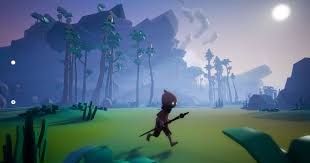
What Makes a Game “Low Poly”?
“Low poly” literally means low polygon count—models made from fewer vertices and faces. But it’s more than a technical choice; it’s an artistic philosophy. Low poly design embraces abstraction, focusing on color, lighting, and composition instead of raw detail. The result? Clean, readable visuals that age gracefully and load instantly, even on modest hardware.
In a sense, low poly art is the digital equivalent of impressionism: the fewer the details, the stronger the emotion. It invites your imagination to fill the gaps.
Why Players Love Low Poly Games
There’s a charm to simplicity. The lack of noise lets gameplay and atmosphere shine. Low poly worlds often feel timeless—neither retro nor hypermodern, just effortlessly stylish. Players also love how these games perform smoothly, especially on mobile or indie platforms. And let’s be honest: they just look cool.
| Reason | Impact on Player Experience | Example Game |
|---|---|---|
| Visual Clarity | Easy to read scenes without clutter or overload. | Superhot |
| Performance | Runs smoothly on most devices, great for indies and mobile. | Clustertruck |
| Timeless Style | Doesn’t age like realism; feels artistic instead. | Journey |
| Focus on Gameplay | Simple visuals allow stronger mechanics and story. | Totally Accurate Battle Simulator |
| Unique Mood | Colors and shapes set emotional tone effectively. | Proteus |
Best Low Poly Games You Should Try
Here’s a mix of iconic and underrated low poly games across genres. Each brings something unique to the table—some prioritize atmosphere, others creativity or chaos.
| Title | Developer | Genre | Why It Stands Out |
|---|---|---|---|
| Firewatch | Campo Santo | Adventure | Warm, cinematic low poly world that feels painted by light. |
| Superhot | SUPERHOT Team | Action / Puzzle | Minimalism turned into combat elegance—motion itself is the art. |
| Journey | Thatgamecompany | Exploration | A wordless narrative told through shape and motion. |
| Clustertruck | Landfall Games | Platformer | Pure chaos rendered in blocky brilliance. |
| Valheim | Iron Gate Studio | Survival | Blends low poly landscapes with rich lighting for epic depth. |
| Poly Bridge | Dry Cactus | Simulation / Puzzle | Geometric design meets physics-driven creativity. |
| Proteus | Ed Key & David Kanaga | Exploration | A meditative experience of music, shape, and discovery. |
| The Long Dark | Hinterland Studio | Survival | Low poly wilderness painted with emotional solitude. |
The Artistic Philosophy Behind Low Poly Design
Low poly isn’t about limitation—it’s about intention. The goal is to suggest detail, not overwhelm with it. It’s the same principle painters use when they leave visible brushstrokes: it invites imagination. When done right, the viewer forgets the polygons and sees only atmosphere and emotion.
Low Poly in Modern Game Development
With the rise of indie engines like Unity and Godot, low poly aesthetics have become a go-to for small teams and solo devs. Not because it’s “easier,” but because it’s expressive and efficient. Lighting and shaders now make even simple geometry look stunning. Stylized visuals also make games memorable—something even AAA studios are rediscovering.
Tips for Developers Exploring Low Poly Art
- Keep shapes clean. Avoid unnecessary edges; clarity beats realism.
- Use color as storytelling. Pick palettes that reflect tone, not just realism.
- Lighting is your best texture. Directional light defines form better than detail maps.
- Embrace imperfection. Slight asymmetry adds charm and believability.
Why Low Poly Still Matters
In an age of ray tracing and 8K resolutions, low poly games remind us that artistry doesn’t depend on hardware. They stand as proof that imagination matters more than polygons. And for many players, that simplicity feels… peaceful.
Final Thoughts: The Geometry of Emotion
The best low poly games aren’t about showing less—they’re about saying more with less. Whether you’re wandering through misty forests in Firewatch or building impossible bridges in Poly Bridge, every triangle tells part of a story. These games prove that beauty isn’t measured in polygons, but in how deeply a world makes you feel something.
Author’s Note (E-E-A-T Transparency): Written by a game designer and visual artist with professional experience in stylized 3D workflows and indie development. Insights are based on real-world projects, engine experimentation, and analysis of visual trends in contemporary low poly design.